

Michael Saylor’s Real Product Was Never Bitcoin. It Was Volatility.
On August 3, 2026, Michael Saylor told X followers he had never sold his bitcoin, writing, “Not one satoshi. Strategy is a public company, not my wallet.” That same week, the company sold 1,638 bitcoin for about $104.7 million, roughly 15% below what it had paid.
The proceeds went to preferred-stock dividends and to buying back its own high-yield preferred. The “never sell” slogan was aimed at retail holders; the balance sheet was always built to do something else.
A Mantra Built for Individuals, Not a Balance Sheet
Saylor’s “Never sell your bitcoin” post on February 2, 2025 became a conviction-brand rallying cry. After Strategy’s first bitcoin sale in years drew mockery, he sharpened the line.
At BTC Prague in June 2026, Saylor said he had “never said the company could not sell bitcoin.” The mantra, he explained, was guidance for individuals, not a corporate vow.
It is a tidy distinction. It lets the chairman keep the conviction brand while the company reaches for whichever dollar faucet is open.
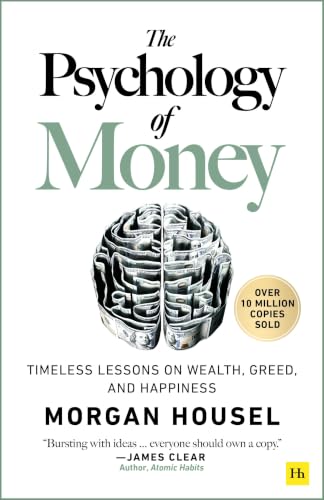
- 19 short stories on how emotions, ego, and luck drive money decisions
- Shows why staying wealthy is a different skill than getting wealthy
- The rare finance book about behavior, not formulas
The Machine Was Never Just About Buying Bitcoin
Strategy, the company that was MicroStrategy until its 2025 rebrand, runs a model with three moving parts. It raises dollars, buys bitcoin, and then uses the bitcoin and the stock’s premium to raise more dollars.
The funding comes in layers. Since 2020 the company has sold common stock through at-the-market programs, issued convertible debt, and sold perpetual preferred shares.
Each layer sells a different risk to a different buyer. Common equity is the leveraged, high-volatility bet; convertible notes blend bond protection with bitcoin upside; preferreds promise yield.
The preferred complex is where the engineering gets explicit. STRF, STRK, STRD, STRE, and the floating-rate STRC together commit the company to cash payouts.
STRC launched in July 2025 at a 9% rate. By late July 2026 it carried about $10.5 billion of notional value and owed roughly $1.26 billion a year at 12%, paid in cash twice a month.
That obligation dwarfs the legacy business. Strategy’s software unit booked $122.4 million of revenue in a quarter that declared $507.7 million of preferred dividends.

- Traces money from seashells to gold to explain what makes a currency hard
- Makes the economic case for Bitcoin as digital sound money — and its limits
- Gives crypto-curious readers the history before the hype
Volatility Is the Real Product
Saylor’s own label for the operation is “volatility engineering.” He says the goal is to strip swings out of the preferreds and concentrate them in the common stock.
That reframe flips the usual objection on its head. Instead of fearing bitcoin’s crashes, the company packages the turbulence into securities with different risk profiles.
The market premium is the other half of the trade. When the stock trades above the value of its bitcoin — a premium to net asset value — issuing shares effectively buys bitcoin at a discount.
Saylor told a Fox Business interview that bitcoin’s annualized volatility has fallen from about 80% in 2020 to roughly 50%. The machine still needs enough turbulence to justify the preferred yields and the equity upside.
When the Flywheel Runs in Reverse
Through 2024 and 2025, the flywheel pointed one way. Strategy issued at a premium, bought bitcoin, and grew the bitcoin behind each share.
Bitcoin peaked near $125,000 in October 2025, then slid for months. By mid-2026, the common stock traded near the value of its bitcoin instead of at a fat premium.
The fixed obligations did not fall with the price. Preferred dividends are contractual dollar payments, and STRC’s floating rate climbed from 9% to 12% by June 2026.
Strategy had already started building a buffer. In December 2025 it announced a $1.44 billion dollar reserve from common-stock sales, and by early August 2026 the reserve had grown to $4.0 billion.
Then came the first sale since 2022. In late May 2026, the company sold 32 bitcoin for about $2.5 million to help fund preferred distributions.
More followed. Between late June and early July, Strategy sold 3,588 bitcoin for roughly $216 million to fund dividends and top off reserves.
In late July and early August it sold another 1,638 bitcoin at an average of about $63,957. Half the proceeds paid preferred dividends, and the other half repurchased STRC near $89 against its $100 stated value.
Strategy calls that repurchase “buying a dollar for 89 cents.” In June, the board also adopted a “Digital Credit Capital Framework” with a built-in bitcoin monetization program.
That is the landmark. The coin once framed as untouchable now has an official sell switch.
Bitcoin Has Become Working Capital
The shift is easy to overstate. Strategy still holds more than 842,000 bitcoin, and everything sold so far is under 1% of the stack.
Direction matters more than size. Bitcoin moved from “accumulate forever” to “tap when the bills come due.”
In accounting terms, that is close to the textbook job of working capital: an asset held to meet ongoing obligations.
Whether the model survives now comes down to two levers. Can the company keep raising capital at acceptable prices, and can bitcoin’s price and volatility keep the obligations serviceable?

- Benjamin Graham's classic — Buffett calls it the best investing book ever written
- Teaches margin of safety and the famous Mr. Market parable
- Jason Zweig's commentary ties each chapter to modern markets
Saylor still projects roughly 29% annualized bitcoin returns over a 21-year horizon. If that forecast stays wrong long enough, more of the vault becomes the operating account.
That is the quiet end state of a pitch built on permanent conviction. The asset was never the product — the willingness to keep issuing and slicing the risk was.
Crypto Without the Hype
Crypto Looks Exciting. Here Are 10 Reasons to Pause
