

Why the Media Rolls Out Ed Zitron Every Time AI Is Winning
When editors want to puncture AI’s winning streak, they turn to Ed Zitron. Before becoming the industry’s most-quoted critic, he worked in public relations, making tech companies look good. That reversal helps explain why his name surfaces whenever the AI story starts glowing.
The Flack Who Switched Sides
Ed Zitron ran his own tech PR operation before walking away from the spin business. He now writes the newsletter "Where's Your Ed At" and hosts the podcast "Better Offline," taking aim at the industry he once promoted.
His signature idea is the "Rot Economy": his argument that big tech no longer grows by inventing better products, but by cutting costs, raising prices, and quietly making the customer's experience worse. It is a punchy label, and journalists can hang an entire story on a two-word frame.
Why Every Boom Mints a Star Skeptic
Hype cycles do not just mint fortunes; they mint critics. When coverage turns uniformly rosy, editors go hunting for a credible voice who will say the opposite, because tension makes a story readable and balance makes it feel responsible.
Readers do the rest: after enough breathless headlines, an audience builds a real appetite for someone willing to spoil the party. Zitron fits the job description almost perfectly.
He is quotable, combative, and happy to be named, while many academics wrap their doubts in hedges that die on the editing floor. Better yet, he cannot be waved off as an outsider who fails to grasp how tech's spin machine works, because he used to run one.
There is also a plain supply problem: the heretical line has to be said on the record by someone credible, and credible candidates are scarce. The role has precedent: Michael Burry walked out of the housing crash with a movie deal, and Jeremy Grantham gets quoted every time valuations stretch.
The Track Record That Keeps His Phone Ringing
A skeptic's career survives on early calls that age well, and Zitron has banked several. A widely shared essay in The New Republic argued that tech's obsession with cost-cutting, not a robot takeover of jobs, was the real force scrambling the labor market.
He spent years hammering Google's ad-cluttered search results before mainstream complaints about search quality became common. He was scathing about the metaverse and the crypto mania while those stories still had momentum, and he watched both deflate.
By the time generative AI exploded, journalists already had a ready-made character: the skeptic with receipts. Each boom has raised his platform, which points to an uncomfortable truth about the job. Being the designated skeptic is good business, because the bigger the hype, the bigger the audience hungry for the counter-narrative.
What Zitron Actually Argues about AI
Strip away the punchlines and his AI case is a business argument, not a mystical one. His core claim is that generative AI consumes staggering computing costs while producing thin and unreliable revenue, so the boom runs on hype, subsidies, and corporate fear of being left behind.
He has also argued that the products underdeliver against their demos and that "artificial intelligence" is mostly marketing language draped over pattern-matching software. Those are contested arguments, not settled facts. Treat them as one side of a live fight, because that fight is exactly what boom-time coverage is selling.
Plenty of real money is riding on the verdict, since AI enthusiasm has helped drive some of the market's most valuable stocks.
The Strongest Case against Him
Fair coverage means noting that the other side has real ammunition. AI tools now sit in front of enormous audiences, embedded in search engines, office software, and phones, and that is genuine adoption however the accounting turns out.
Bulls also argue that heavy infrastructure spending is the normal, ugly early phase of platform building, the way railroads and the early internet burned cash for years before the payoff arrived. And Zitron's critics note that his priors run so bearish that every stumble reads to him as proof the whole machine is rotten.
That points to the structural quirk of the star-skeptic role: his prominence depends on the boom staying contested, not on it actually collapsing.
Why Your Money Should Care
For an investor, the meta-question matters more than the verdict. Coverage cycles and market cycles feed each other, and understanding how the media manufactures both hype and backlash makes you a harder mark for each.
The same machinery that makes a boom feel inevitable sits behind many of the classic investing mistakes that bust portfolios. Behavioral-finance researchers have documented for decades that emotion and narrative drive money decisions at least as much as spreadsheets do.
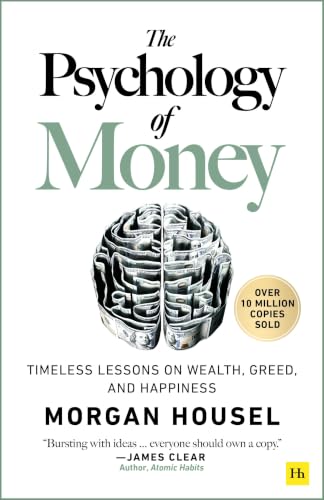
- 19 short stories on how emotions, ego, and luck drive money decisions
- Shows why staying wealthy is a different skill than getting wealthy
- The rare finance book about behavior, not formulas
The cheap insurance is process, not prophecy. Investors who last through hype cycles demand a margin of safety, insist that price connect to business value, and spread their bets beyond the story of the day.
That is Benjamin Graham's old playbook, or common-sense investing by another name, and it was built for moments when the crowd stops asking what things cost.

- Benjamin Graham's classic — Buffett calls it the best investing book ever written
- Teaches margin of safety and the famous Mr. Market parable
- Jason Zweig's commentary ties each chapter to modern markets
You do not have to pick a winner between the cheerleaders and the skeptics. You just have to keep a balanced dashboard of market signals and remember that the loudest voices on both sides are, in part, running businesses.
Stock-Market Valuation, From Price to Business Value
Is That Stock a Bargain or a Trap?